Make a familiar living room feel calmer with practical changes to light, textiles, and layout.
In this story
Start with the everyday situationMake the tradeoff deliberatelyBuy for the seat you use mostBefore you orderQuestions worth askingWhere to compare optionsA living room can feel unfinished even when the large furniture is perfectly serviceable. Perhaps the sofa came from an earlier apartment, the rug is slightly too small, and every lamp points toward the ceiling. Start with the evening you actually spend there: a book, a conversation, or an hour with the television. Improving that experience gives the room direction.
Start with the everyday situation
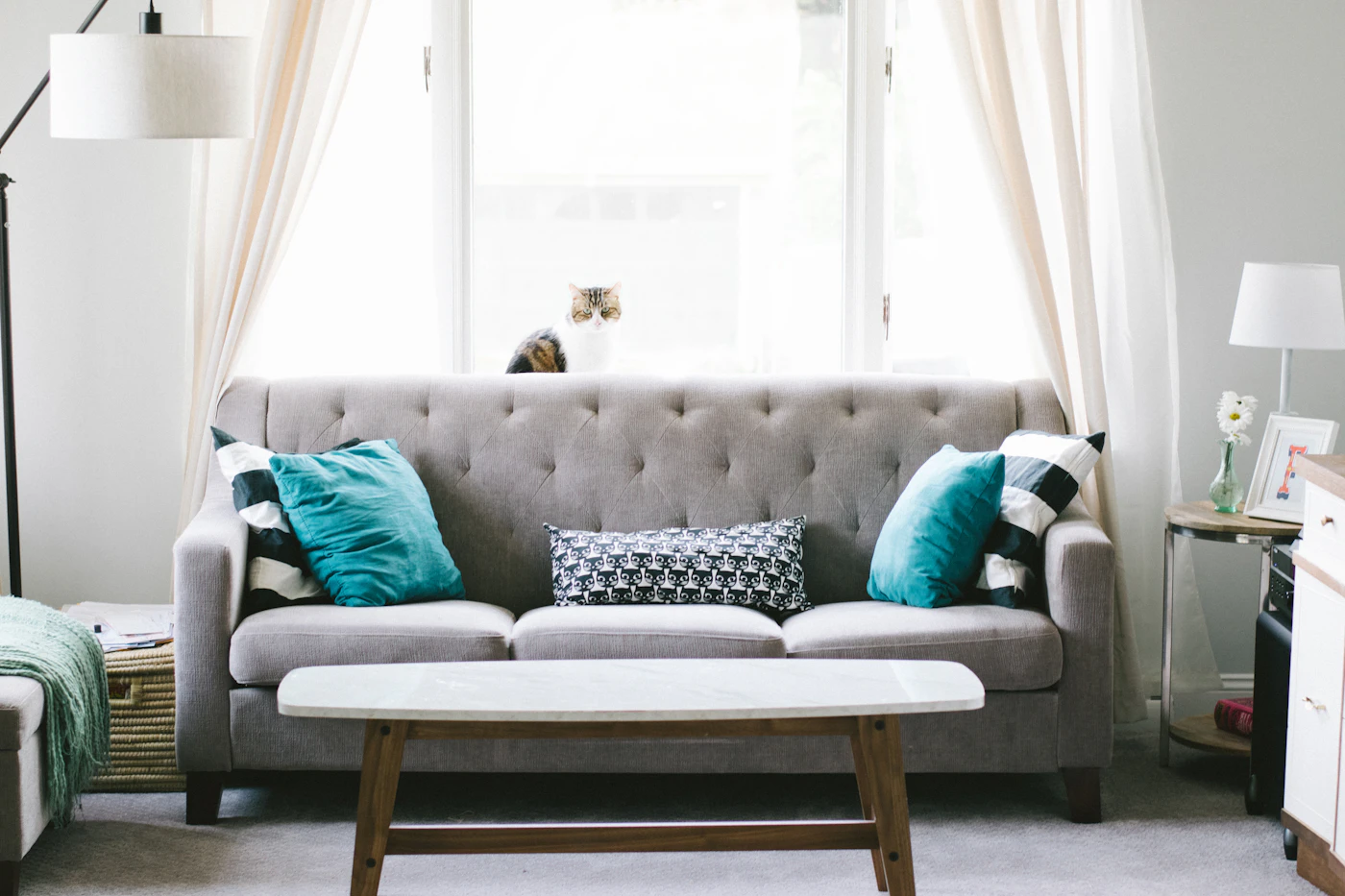
Keep the sofa and choose one connecting color already present in its fabric. Repeat that shade in a cushion cover and a small piece of art, then add a contrasting texture. A smooth cotton sofa benefits from a nubby woven cushion; a heavily textured sofa usually needs something quieter. Limit the first purchase to two covers so the room stays comfortable to sit in.
Before ordering a rug, tape its proposed outline on the floor. Check that the front legs of the main seats can meet it without forcing the coffee table into the walkway. A larger plain rug often makes more visual sense than a small patterned one, but a washable smaller rug can be preferable in a space where spills happen frequently.
Make the tradeoff deliberately
Use a reading lamp beside the seat that needs it, then a separate low lamp elsewhere. Shade shape matters: an opaque directional shade suits a book, while a fabric shade spreads light around a conversation area. Check bulb compatibility and the lamp’s cord route before choosing a sculptural base.
Finish by removing one object from each crowded surface. Leave a place for a glass and the remote, and keep a throw within reach rather than draped across every seat. Photograph the room in daylight and after dark. The second view often reveals whether another decorative purchase would solve anything.
Buy for the seat you use most
Cushion covers are a modest first step, but compare their closures and washing instructions. A concealed zipper keeps the insert accessible; an envelope closure avoids hardware but needs sufficient overlap. Measure the insert you already own rather than relying on its old label.
For a throw, consider where it will rest during the day. A loosely knitted blanket may snag in a busy household, while a densely woven option can be less dramatic but easier to fold and store. Choose the texture for its role.
A floor lamp needs a stable position and a reachable control. Compare the shade height with the seated reader rather than the sofa back alone. If the light is visible directly in your eyes, a beautiful base will not compensate for the glare.
Look at the room from its entrance before adding art. A single larger piece may connect the seating area better than scattered small frames. Check the hanging method, frame weight, and wall construction, and leave nearby surfaces clear enough for the composition to register.
Before you order
- Measure the available space and the route from the entrance.
- Check the full product dimensions, including handles or projecting parts.
- Match the care instructions to the time and equipment you have.
- Read delivery, return, and assembly conditions for the actual item.
- Decide where the replaced item will go before bringing something new home.
Questions worth asking
Can the old sofa stay?
Yes, if it remains comfortable and structurally sound. Change one surrounding layer at a time, beginning with the rug placement or light beside your favorite seat. Keep fabric samples near the upholstery so new colors connect with what you already have.
What deserves the biggest share of the budget?
Prioritize the piece you touch or use most often and any work needed to install it correctly. Decorative extras can wait. If the main problem is layout, test a rearrangement before buying: a different position can sometimes provide the improvement you expected from a new object.
How do you avoid a rushed purchase?
Save the measurements, compare two or three plausible options, and leave the decision overnight when possible. A sale should not override the original requirement. If none of the options fits the room and the routine, keep looking rather than accepting a compromise that creates another problem.
Where to compare options
Use the IKEA lighting collection as one starting point for comparing current options. Check each item’s measurements, care guidance, delivery, and return terms before buying. This is an ordinary, untracked retailer link, rather than an affiliate recommendation or evidence of hands-on testing.
Our guides explain how to choose, rather than claim hands-on tests. Check current product details, returns and travel conditions directly before booking or buying. Our editorial approach.